
Vertigo & Dizziness Treatment in Monterey
Drug-free vertigo and dizziness relief in Monterey, CA. Our doctors treat cervicogenic dizziness and BPPV without medication or surgery.
Chiropractic care for vertigo & dizziness
Get to the root of your vertigo & dizziness
Also known as: Dizziness, Cervicogenic Dizziness, BPPV
If the room starts spinning when you roll over in bed, or dizziness hits every time you look up or turn your head, the cause may be closer than you think — your inner ear or upper neck. At New Beginnings Chiropractic in Monterey, our doctors evaluate both, distinguish the type of dizziness you're experiencing, and offer drug-free care for the two most chiropractic-relevant forms: BPPV and cervicogenic dizziness.
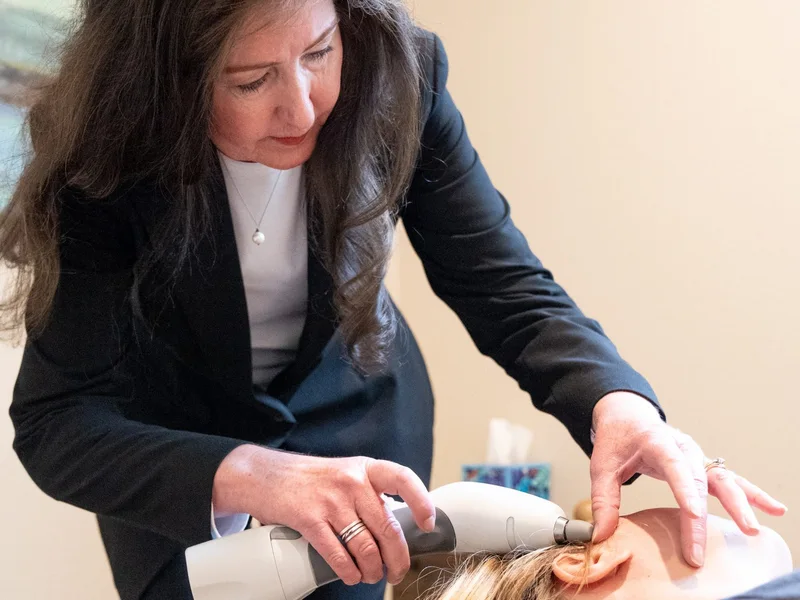
Symptoms of vertigo & dizziness
- ✓A spinning sensation (room feels like it is moving)
- ✓Dizziness triggered by head or neck movement
- ✓Imbalance or unsteadiness when standing or walking
- ✓Nausea or vomiting alongside dizzy episodes
- ✓Lightheadedness when changing positions
- ✓Neck stiffness or upper-neck soreness accompanying dizziness
- ✓A feeling of fullness or pressure in the ears
Common causes
- BPPV — displaced calcium crystals (canaliths) in the inner ear
- Upper cervical joint dysfunction affecting balance signals
- Whiplash or neck injury disrupting normal cervical proprioception
- Forward-head posture and prolonged screen use straining the upper neck
- Muscle tension in the suboccipital region compressing nerve endings
- Post-concussion changes in the vestibular system
- Dehydration or inner-ear inflammation triggering episodes
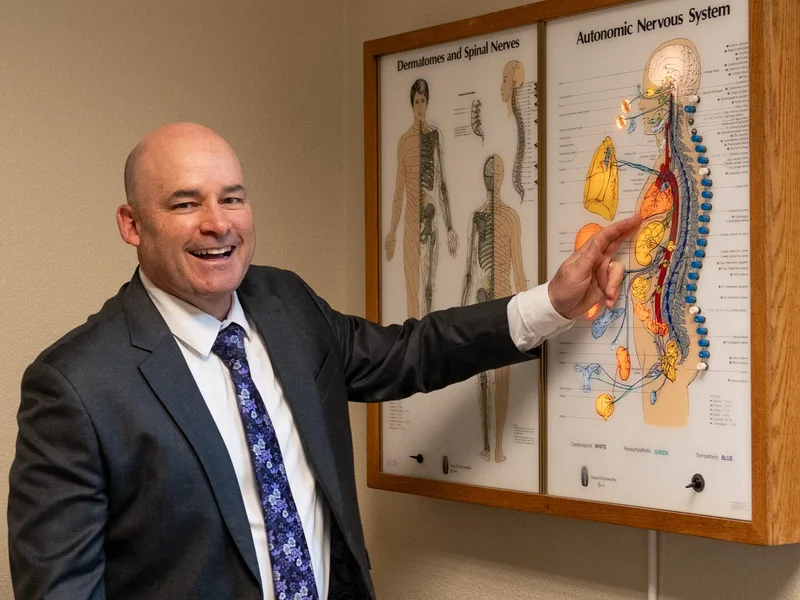
Our approach
How we treat vertigo & dizziness in Monterey
- Step 1
Thorough assessment
We take a detailed history, screen for red-flag dizziness (stroke, cardiac, or neurological causes), and perform orthopedic and vestibular testing to identify whether your dizziness is cervicogenic, BPPV, or something that needs a referral.
- Step 2
A targeted, honest plan
If you're a good candidate for chiropractic care, you receive a plain-English explanation of what we found and a specific, time-bound plan. If your dizziness points to a cause outside our scope, we refer you to the right provider promptly.
- Step 3
Gentle treatment & movement rehab
We use gentle upper-cervical adjustments and, for BPPV, canalith-repositioning maneuvers (such as the Epley maneuver) alongside corrective exercise to restore stable balance and reduce recurrence.
The basics
Understanding vertigo & dizziness
Vertigo and dizziness are not a single condition — they are symptoms that can come from several different systems in the body. The most important first step is determining which system is involved, because the treatment differs completely.
The two forms we most commonly evaluate and treat at New Beginnings Chiropractic are BPPV (benign paroxysmal positional vertigo) and cervicogenic dizziness. BPPV occurs when calcium carbonate crystals called canaliths break loose inside the semicircular canals of the inner ear and send garbled signals to the brain whenever the head moves into certain positions. Cervicogenic dizziness arises from the upper cervical spine — the joints at the top of the neck are densely packed with proprioceptors, sensory nerve endings that help your brain track where your head is in space. When those joints are restricted, injured, or irritated, the signals they send become unreliable, and the brain interprets that as dizziness or unsteadiness. Both forms respond well to conservative, drug-free care. What chiropractic cannot treat — and will actively screen for and refer out — is dizziness rooted in serious cardiovascular, neurological, or inner-ear disease.
Limited-Time Offer
$47 New Patient Special
$357 Value — Your complete first visit — one simple price.
Your Visit Includes
New patients only. Mention this special when you book. The $47 new patient special does not include shockwave treatment.
Types of vertigo & dizziness we help
“Dizziness” covers a wide range of sensations, and the right treatment depends on the cause. We regularly help Monterey-area patients with:
- BPPV (benign paroxysmal positional vertigo) — intense brief spinning triggered by rolling over in bed, looking up, or tilting the head. Caused by displaced ear crystals and treated with canalith-repositioning maneuvers like the Epley. Often resolves in one to three sessions.
- Cervicogenic dizziness — a persistent unsteadiness or foggy-head feeling that comes from restricted or irritated joints in the upper neck. Frequently accompanies neck stiffness, headaches, or a history of whiplash.
- Dizziness after whiplash or neck injury — trauma disrupts normal cervical proprioception, and the brain loses its reliable balance signal from the neck. Restoring upper-cervical joint motion is central to recovery.
- Postural and screen-related dizziness — forward-head posture places chronic load on the upper cervical joints and suboccipital muscles, gradually degrading the balance signals they send. Addressed with corrective exercise and postural rehab.
Conditions outside our scope — Meniere’s disease, vestibular neuritis, cardiac causes, and neurological disorders — receive prompt referral. We screen at every exam and will never overtreat.
What to expect at your first visit
Your first appointment takes about 45–60 minutes and is focused on finding out why you’re dizzy before treating anything. We’ll:
- Listen to your history — when episodes started, what positions or movements trigger them, whether neck pain or headaches accompany them, and any prior workup you’ve had.
- Screen for red flags — we perform clinical tests to rule out cardiovascular, neurological, or inner-ear causes that require immediate referral. If something doesn’t fit a musculoskeletal pattern, we’ll tell you honestly and point you to the right provider.
- Test the vestibular and cervical systems — orthopedic, neurological, and vestibular testing distinguishes BPPV from cervicogenic dizziness and guides your care plan.
- Explain what we found — in plain English, with a specific, time-bound plan and clear goals — not open-ended treatment.
- Begin care when appropriate — many patients with BPPV receive a repositioning maneuver the same visit; cervicogenic dizziness care often starts with a gentle upper-cervical adjustment the same day.
Drug-free help for vertigo & dizziness
Antivert and other vestibular suppressants can blunt dizziness symptoms for a few hours, but they do nothing to reposition displaced crystals or restore normal neck-joint motion. Chiropractic care addresses the structural cause — so the goal isn’t just fewer dizzy spells today, but better balance and stability long-term. For most patients that means returning to driving, exercising, and working without the constant fear of an episode. And when a cause is outside our scope, we refer without delay — we’d rather send you somewhere else quickly than treat the wrong thing slowly.
When to see a chiropractor in Monterey
Some dizziness is fleeting and harmless. Other dizziness is a signal worth acting on. Consider calling our Monterey office if you notice:
- Spinning or unsteadiness triggered by rolling over, looking up, or turning your head
- Dizziness that accompanies neck pain, stiffness, or a recent whiplash injury
- Lightheadedness that gets worse with prolonged sitting, screen use, or forward-head posture
- Recurring episodes with no clear medical diagnosis after a prior workup
- Dizziness that is limiting your confidence while driving, working, or exercising
Seek emergency care immediately if dizziness occurs alongside sudden severe headache, one-sided weakness or numbness, slurred speech, double vision, or loss of consciousness — these can be signs of stroke and require 911, not a chiropractic appointment. We take this seriously and will never minimize a red-flag presentation.
If your symptoms fit a cervicogenic or BPPV pattern, an exam at New Beginnings Chiropractic can clarify the picture and get you started on a clear, drug-free path forward. Learn more about how neck pain and upper-cervical dysfunction contribute to dizziness, or review what to expect as a new patient.
Why Monterey-area patients choose New Beginnings Chiropractic
Patients from Monterey, Seaside, Pacific Grove, and Carmel choose New Beginnings Chiropractic for vertigo care because we do the work of distinguishing why they’re dizzy before we treat anything. Our doctors combine vestibular screening, upper cervical examination, and postural assessment into one visit — so nothing gets missed and nothing gets over-treated.
For BPPV, we perform canalith-repositioning maneuvers (including the Epley) in the office and teach patients a home version to reduce future episodes. For cervicogenic dizziness, we use gentle chiropractic adjustments to restore normal joint mobility in the upper neck, paired with corrective exercise to retrain posture and proprioception so the dizziness doesn’t return once care ends.
We know living with vertigo affects every part of your day — driving, working, sleeping, exercising. Our goal is to give you honest answers and real results quickly, and to refer without hesitation when something is outside our scope.
Ready to find out what’s behind your dizziness? Book an appointment online or learn more about what your first visit looks like at our new patient page.
Why choose chiropractic
Chiropractic care vs. medication for vertigo and dizziness
| Comparison factor | Chiropractic Care | Medication |
|---|---|---|
| Addresses the root cause | ✓Corrects joint or crystal displacement | ✕Suppresses symptoms only |
| Drug-free & non-invasive | ✓Always | ✕Rarely |
| Risk of side effects | ✓Minimal | ✕Drowsiness, dependency risk |
| Works for cervicogenic dizziness | ✓Highly effective | ✕Limited benefit |
| Works for BPPV | ✓Repositioning maneuvers work well | ✕Meds do not reposition crystals |
| Long-term recurrence prevention | ✓Exercise and posture correction included | ✕Seldom addressed |
Treatment options
Services we use to relieve vertigo & dizziness
Chiropractic Care
Gentle, precise chiropractic adjustments in Monterey, CA that restore motion to restricted joints and relieve back pain, neck pain, and headaches at the source.
Learn more →Activator Methods Technique
Activator Methods chiropractic in Monterey — a spring-loaded, low-force instrument adjustment for all ages, backed by decades of research. Gentle, precise, effective.
Learn more →Related conditions
Other conditions we treat in Monterey
Patient reviews
What our Monterey patients say
“I’ve been seeing Dr(Richard) Westbrook for about 25 yrs. My go-to for injuries, maintenance, and great conversation . Also to keep my immune system up. A true partner in healing. I mean the guy even “walked me through” menopause pretty much unscathed which is quite a recommendation. And is also now my partner in aging well. I think his work has been one of the reasons I’m upright, and look and feel younger than most 75 yr olds ( who don’t exercise regularly .) If you need someone to truly listen to you and heal and help you feel better he’s by far the best.”
“I have been a patient of Dr. Westbrook’s since 2010. Whenever I need chiropractic care, he is someone I trust completely. Dr. Westbrook is kind, professional, knowledgeable, and genuinely attentive to his patients’ individual needs. He takes the time to listen and has always made me feel comfortable and cared for. He is also incredibly accommodating with scheduling and has gone out of his way several times to fit me in when I needed an appointment on short notice. That level of care means a great deal to me. I especially appreciate his approach because I have had experiences with other chiropractors who were too rough and left me feeling nervous and afraid during adjustments. I have never felt that way with Dr. Westbrook. I trust him 100% and always feel that my comfort and safety are important to him. He offers both manual adjustments and the Activator technique, which I also appreciate. In all the years I have seen him, there was only one occasion when something did not feel quite right after an adjustment. When I contacted him, he got me back into the office right away, addressed the problem, and I left feeling great. That experience actually gave me even more confidence in the level of care he provides. Dr. Westbrook also has a wonderful personality and sense of humor. He makes you feel at ease while still maintaining a high level of professionalism. I always enjoy seeing him, and I consistently leave my appointments feeling better than when I walked in. His wife is also a chiropractor in the practice and has always been extremely kind and professional, although I personally see Dr. Westbrook most often. The entire office is clean, comfortable, and inviting, and the front desk staff are always friendly and welcoming. I enjoy their water massage chairs as well! After knowing the Westbrooks and returning to their practice for more than 15 years, I would highly recommend them to anyone looking for compassionate, professional chiropractic care. Finding a chiropractor you genuinely trust is so important, and I am very grateful to have found that with the Westbrooks.”
“Dr. Richard Westbrook has been my chiropractor for years and years and years. He is great at both providing temporary relief when you are in pain and also helping you prevent future problems. His latest addition to his office is a Shockwave machine, which is an amazing device for treating chronic pain. Be sure to ask him about it!”
Can a chiropractor help vertigo?+
Yes — for the two most common chiropractic-relevant types. Cervicogenic dizziness (caused by upper-neck joint dysfunction) responds well to gentle cervical adjustments and soft-tissue work. BPPV (caused by displaced ear crystals) is treated with canalith-repositioning maneuvers like the Epley, which chiropractors trained in vestibular rehab perform routinely. We screen every patient to confirm which type is present and refer out when dizziness has a cardiac, neurological, or other medical cause.
What causes vertigo?+
The two most common causes we see are BPPV — tiny calcium crystals that shift inside the inner-ear canals and send faulty balance signals — and cervicogenic dizziness, where restricted or irritated joints in the upper cervical spine confuse the brain's balance center. Other causes include Meniere's disease, vestibular neuritis, migraines, and — rarely — serious conditions like stroke. That's why a proper exam matters before starting any treatment.
What is the Epley maneuver?+
The Epley maneuver is a series of precise head and body positions that guide displaced calcium crystals back to where they belong inside the inner ear. It takes about five minutes in the office and often produces significant relief within one to three sessions for patients with posterior-canal BPPV. Our doctors will also teach you a home version to use if symptoms return.
How long does vertigo last?+
BPPV episodes typically last seconds to a minute but can recur for days or weeks if untreated. Cervicogenic dizziness often persists as low-level unsteadiness until the underlying neck mechanics are addressed. With appropriate care, most patients see meaningful improvement within a few visits, though the timeline depends on how long the problem has been present.
How is cervicogenic dizziness different from BPPV?+
BPPV produces intense, brief spinning triggered by specific head positions (rolling over, looking up) and is caused by loose ear crystals. Cervicogenic dizziness tends to be more of a constant unsteadiness or fogginess, often accompanied by neck pain or stiffness, and is caused by faulty signals from the cervical joints. Both can coexist, and careful examination distinguishes them.
When is vertigo a medical emergency?+
Seek emergency care immediately if dizziness occurs with sudden severe headache, double vision, slurred speech, weakness or numbness on one side, difficulty walking, or loss of consciousness — these are possible stroke warning signs. We screen for red flags at every exam and will refer you without delay if anything points to a serious underlying cause.
Do I need imaging before my first visit?+
Most patients don't. We perform clinical testing in the office to identify the likely cause and screen for red flags. If we find anything that warrants imaging or a specialist referral, we'll tell you and help coordinate next steps. California is a direct-access state, so no physician referral is needed to see us.
Can poor posture cause dizziness?+
Yes. Forward-head posture — common with desk work and phone use — places chronic stress on the upper cervical joints and suboccipital muscles. Over time this can disrupt the proprioceptive signals those joints send to your balance center, producing persistent dizziness or lightheadedness. Correcting posture is a core part of how we treat cervicogenic dizziness.
How soon will I feel better?+
Many patients with BPPV feel significant relief after one to three repositioning sessions. Cervicogenic dizziness typically improves over a few weeks of care as joint mobility and posture improve. We set a clear, time-bound plan after your exam so you always know what to expect.
Do you treat patients from Seaside or Pacific Grove for vertigo?+
Absolutely. We see patients from across the Monterey area — including Seaside, Pacific Grove, Carmel, and Pebble Beach — for vertigo, dizziness, and related neck concerns. Our office is easy to reach from any of these communities, and you can book online in minutes.